Cameroon : in rural areas, markets and schools lack functional toilets

According to a new study, over 63% of nursery schools and 67% of markets lack any sanitation and hygiene facilities, forcing users to resort to open defecation.
“There are no toilets here. We have to go to the bush or walk far away to find a place. It's very difficult, especially for women." In Mandjou council, located in the Lom and Djerem division of the East region of Cameroon, many schools and markets lack adequate sanitation infrastructures.
According to a new study that interviewed 152 individuals across all 25 villages within the Mandjou council, including two senior officials from the council, 50 representatives from educational institutions and health care facilities, and 100 users of public services, over 63% of nursery schools, 50% of high school and 67% of markets lack any sanitation and hygiene facilities, forcing users to resort to open defecation.
Published in April 2026 in Sustainable Futures, the article focused on the 48 identified public facilities that represented “the entire population of public infrastructures” under the jurisdiction of the Mandjou council : 11 nursery schools, 26 primary schools, four high schools, four health centers, and three markets.
“Significant disparities”
Based of the data collected and analyzed, the team of researchers found “significant disparities” in sanitation service provision between facility types. High performance sanitation services was defined as “improved facilities not shared with other households and where excreta are safely disposed of or treated were only observed in health care facilities and primary schools for example”.
The study considered "improved sanitation facilities" as those designed to hygienically separate excreta from human contact, including flush/pour-flush toilets connected to piped sewer systems, septic tanks, or pit latrines; ventilated improved pit latrines; pit latrines with slabs; and composting toilets.
“Specifically, 50% of health care facilities and 8% of primary schools met the criteria for safely managed services,” the scientists wrote. “In contrast, nursery schools, high schools, and market facilities had no safely managed sanitation services at the time of the survey.”
"Our children have nowhere to go when they need to use the toilet. They have to go behind the building or in the bushes. We worry about their safety and health,” parents told to the team.
Minimal coverage
For the researchers, the minimal coverage in primary schools and the complete absence in other educational and market institutions indicate “systemic gaps in the planning and implementation of safely managed sanitation infrastructure, particularly in non-clinical public facilities”.
According to them, if 62% of primary schools, 50% of health care facilities, 33% of markets facilities, 27% of nursery schools and 25% of high schools had access to basic sanitation services (improved facilities not shared with other institutions, but without safe excreta management), this situation only highlights the fact that “while basic sanitation coverage is relatively more widespread than safely managed services, coverage remains uneven and insufficient in most public institutions”.
They explained it by the lack of a clear strategy for mobilizing funding dedicated to Water, Sanitation, and Hygiene (WASH) activities. Their analysis of the municipal budget documents revealed that less than 2% of the annual council budget was allocated to WASH services between 2020 and 2023.
"WASH is not a priority in our budget. We have many competing needs, and sanitation usually comes last in our planning discussions,” the head of technical services of the Mandjou council told the researchers.
Moreover, survey data revealed that 68% of facility managers identified lack of financial resources as the primary barrier to maintaining sanitation infrastructure.
“Nobody wants to pay”
When the team interviewed some market users, they cited economic factors: "we know we need toilets in the market, but nobody wants to pay to build them or maintain them. Everyone says it's the council's job, but the council has no money.”
"Even though our facilities are functional, we struggle to maintain them because the council provides no budget for cleaning supplies or desludging services,” a health center director said.
The absence of sustainable financing mechanisms, including user fee systems or public-private partnerships, perpetuates the cycle of inadequate sanitation service provision, the scientists acknowledged.
Due to this situation, some NGO have built toilets in many schools of the locality. But after the construction of toilets, their maintenance remained a problem. "We received support from an NGO two years ago to build new latrines, but we don't have money for regular emptying services,” a primary school principal said.
The situation is exacerbated by demographic pressures resulting from refugee influx from Central African Republic and rapid population growth (demographic projections for the region indicate a minimum population growth of 25% by 2030) that increase “demand for services without corresponding increases in infrastructure capacity or financial resources”.
Refugee
“The arrival of refugee populations not only increases the demand for basic sanitation services but also introduces complex social and logistical dynamics,” the study found adding that refugee settlements often grow rapidly and irregularly, creating informal neighborhoods that are difficult to service with conventional infrastructure systems. “This scenario complicates planning, maintenance, and equitable access to sanitation facilities.”
"Our school enrollment increased by 40% in two years because of refugee children. But we still have the same four toilets we built ten years ago. The toilets are always overcrowded and break down frequently,” a primary school principal in a village hosting refugees told the researchers.
Besides those problems, the study also found that hand hygiene remains a critical challenge within public facilities in the Mandjou council: only 50% of health care facilities and 8% of primary schools were equipped with at least one functional hand hygiene station providing both water and soap.
“This alarmingly low coverage of functional handwashing facilities represents a serious gap in infection prevention and control, particularly at key points of care where hygiene practices are essential to reducing disease transmission,” the article stated.
Develop clear WASH strategies
Survey data also revealed that 72% of facility managers cited insufficient budgets as the primary reason for lacking functional handwashing stations. Moreover, the data indicated that even where handwashing facilities existed, they were often non-functional due to lack of water supply (45% of cases), absence of soap (38%), or damaged infrastructure (17%).
For the team of scientists, the combined effect of these institutional, economic, social, and demographic factors creates a challenging environment for sanitation service improvement in Mandjou, requiring multi-sectoral and integrated interventions that address root causes rather than symptoms alone.
“Municipal authorities must prioritize WASH services in budget allocations, develop clear WASH strategies with measurable targets, and establish coordination mechanisms among stakeholders,” they wrote adding that comprehensive hygiene promotion campaigns, school-based WASH education programs, and community engagement initiatives are critical for increasing awareness, changing attitudes, and promoting sustained adoption of hygienic practices.
Josiane Kouagheu
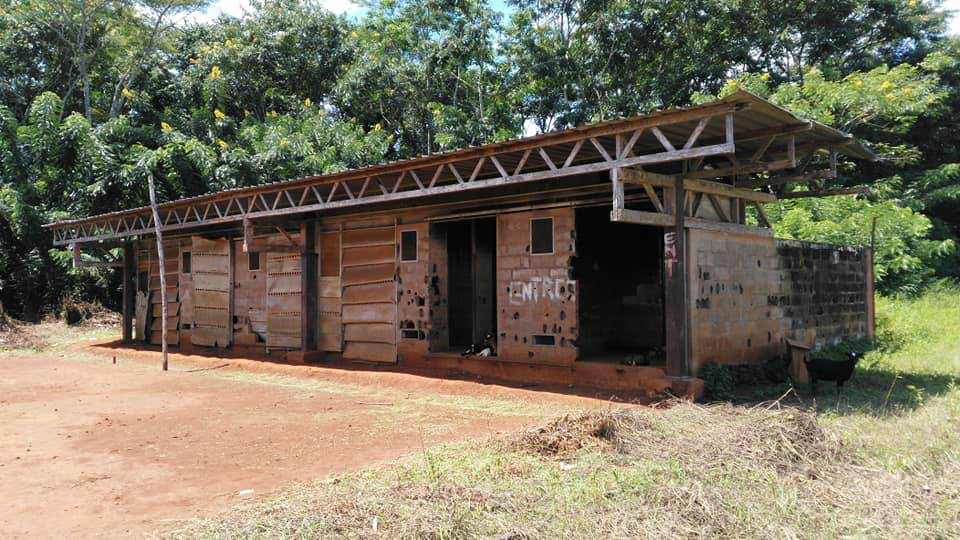
Banner image: Primary school in Ngoulmakong, East Region, Cameroon. Photo by Gustave Biwole via Wikimedia Commons.