In South Africa, Dr. Muthumuni Managa uses nanotechnology to develop sustainable water solutions for rural communities
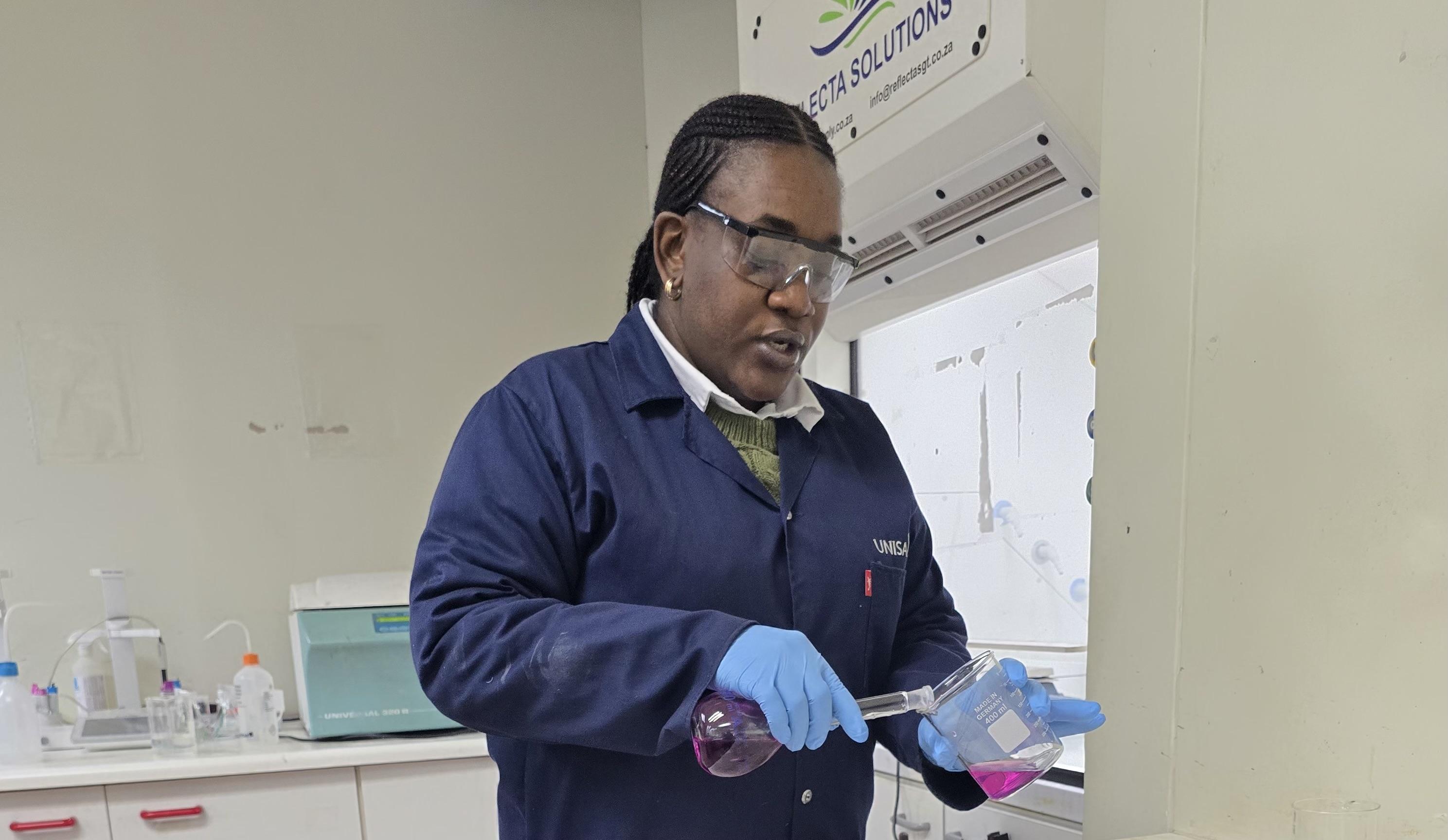

African women researchers. Season 2. Episode 2. “My research is to improve the life of South Africans.” The zoom meeting started minutes ago and despite her busy schedule— she is in Cape Town for a research visit— Dr. Muthumuni Managa, professor at the University of South Africa (UNISA)'s research institute, The Institute for Nanotechnology and Water Sustainability (iNanoWS), takes time to share her passion, with long explanations, and the work she is currently doing in rural areas in South Africa and across Africa.
“There are communities that still collect water from the river,” says the 37-year-old researcher with her teacher's voice. “And they store it in buckets. After a long time, they (buckets) will have a small layer on them. Those are microorganisms (biofilm). So my research is on preventing those layers on those buckets.”
Read the first season of our series: six episodes
According to the World Meteorological Association, by 2050, up to five billion people may have inadequate access to clean water. In Africa, millions of people lack access to clean drinking water. Many collect water from the rivers and store them in buckets or other containers.
“Some one million people are estimated to die each year from diarrhoea as a result of unsafe drinking-water, sanitation and hand hygiene,” the World Health Organization reported, adding that over 2 billion people live in water-stressed countries.
Muthumuni uses “technology by sunlight to actually stop the microorganisms in the store system”. “The water is going to stay fresh for long. [and] Also will not have any microorganisms and contaminations.”
Low-cost water storage
In her various studies on the topic, she explains how activated by light, synthesizing nanomaterials inactivate bacteria in water for example.
Her research focuses on the development of a low-cost water storage container with antimicrobial properties to use in low-resource communities and rural areas. And the technology is always the same: use sunlight to destroy bacteria.
Read the first episode of the second season.
“In previous years, a wide range of conventional treatment methods such as adsorption, membrane separation, biological treatment, and coagulation have been developed for the removal of organic dyes in water,” Managa and her colleagues wrote in one of their studies published in Journal of water process engineering.
“However, the majority of these technologies are either ineffective, time-consuming, costly, or chemically intensive processes.”
“Free from coliforms”
With her team, they develop “effective, low-cost, and reliable techniques for the removal of organic dyes from aqueous solutions”.
“Her research work covers topic that is currently of importance to the country, ensuring the provision of safe drinking water for off-the-grid communities,” says, via e-mail to Agripreneurs d’Afrique, Richard Motlhaletsi Moutloali, professor of Membrane Science and Technology at the Institute for Nanotechnology and Water Sustainability.
“Her project strives to maintain the purity of stored water, ensuring that it is free from coliforms that are drivers of diseases.”
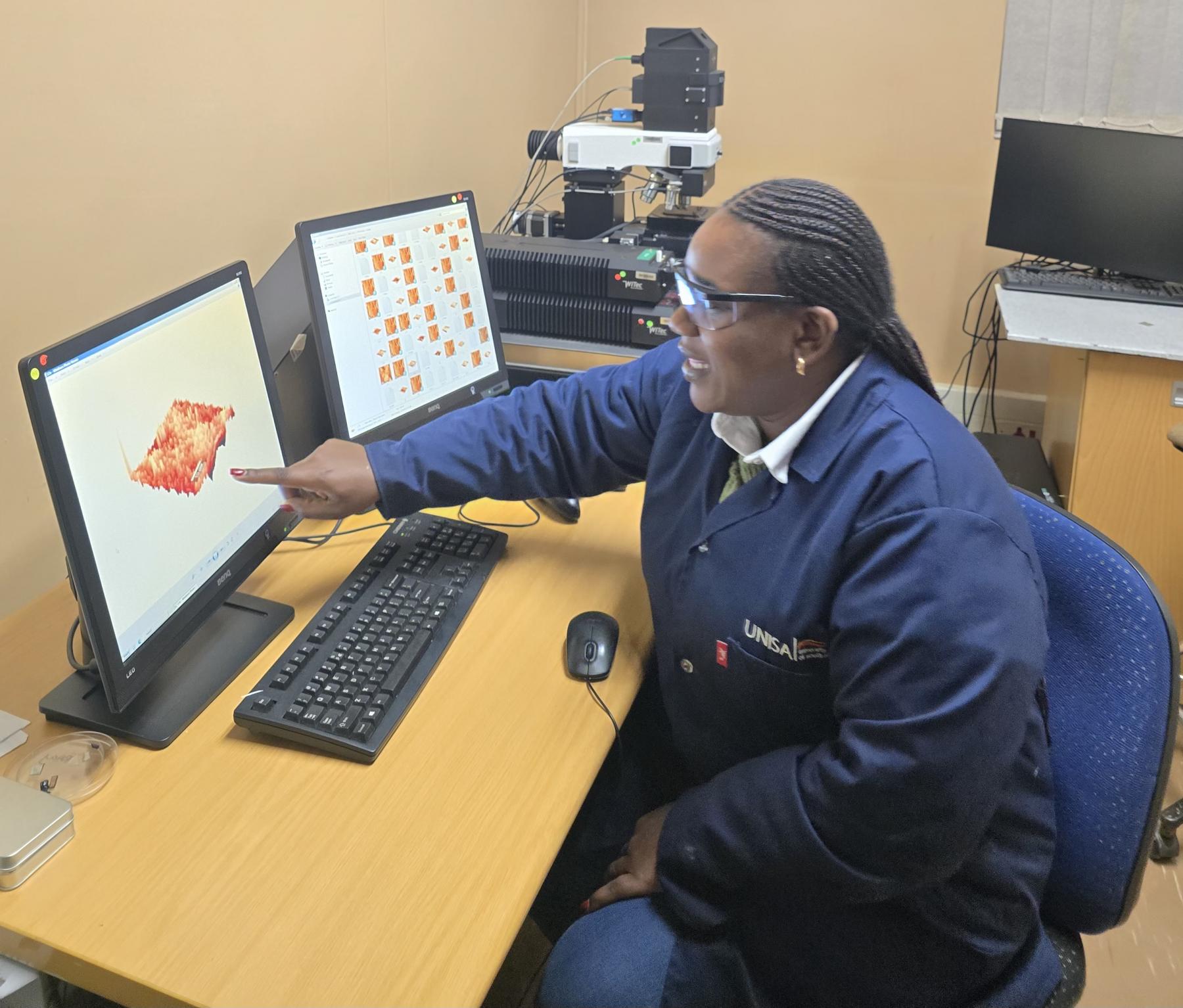
Moutloali has known Managa during her days as a research student studying towards her MSc degree, working in the laboratory of one of his collaborators at the time, Professor Tebello Nyokong. About 10 years later, she joined him at the Institute for Nanotechnology and Water Sustainability as a colleague and professor.
“This also reminded me of how students view us, the professionals, and hold us in high esteem and as examples of their own aspirations,” he explains. “Today, with our assistance, she has risen up to become one of our younger professors in the Institute.”
“Females can do science”
Many professors inspired Muthumuni Managa through her career. But the most significant one is Professor Tabello Nyokong, one of the most influential scientists in South Africa and in the continent. When Managa met her (she became her PhD supervisor), she married her belief that “females can do science”.
“She pushes all the students to apply their full potential,” Managa recalls. “She promotes young colleagues. Female scientists. Honestly, that’s where my passion for research comes from. I didn’t really know I would even continue after my Master's degree. I just wanted to get a degree.”
But after her interactions with Prof. Nyokong, everything changed. Her mentor created an environment that allowed research for her and others when many people around were telling them that science was “too hard” for women, “too difficult” or advising them that they “must” make a family instead.
When Agripreneurs d’Afrique contacted Professor Tabello Nyokong for an interview during the first season of this series, she recommended Dr. Muthumuni Managa and Dr. Lindokuhle Nene, another young scientist.
And when we asked her for a comment about this article, she sent us the supporting statement she wrote in 2023 for Managa when she was nominated for the Higher Education women leaders awards (HEWLA) in the emerging Young women leaders category.
Disinfection techniques
In that letter, Nyokong highlighted “her exceptional achievements and contributions in the field of scientific research”.
“Beyond her research endeavours, Dr Managa has shown a remarkable commitment to technological changes and digital innovation,” she noted, insisting on her aim “to develop novel water disinfection techniques that can benefit communities, particularly in rural areas where access to clean water is a pressing concern.”
Moreover, she amplified Managa’s dedication and involvement in developing and implementing relevant policies that advocate and promote the participation of women and girls in science and technology in South Africa.
Nyokong recalled that as her PhD supervisor, she had witnessed her growth and “evident” leadership skills when she was selected through a “democratic process” as a laboratory manager. “All the students chose her,” she highlighted in her supporting statement.
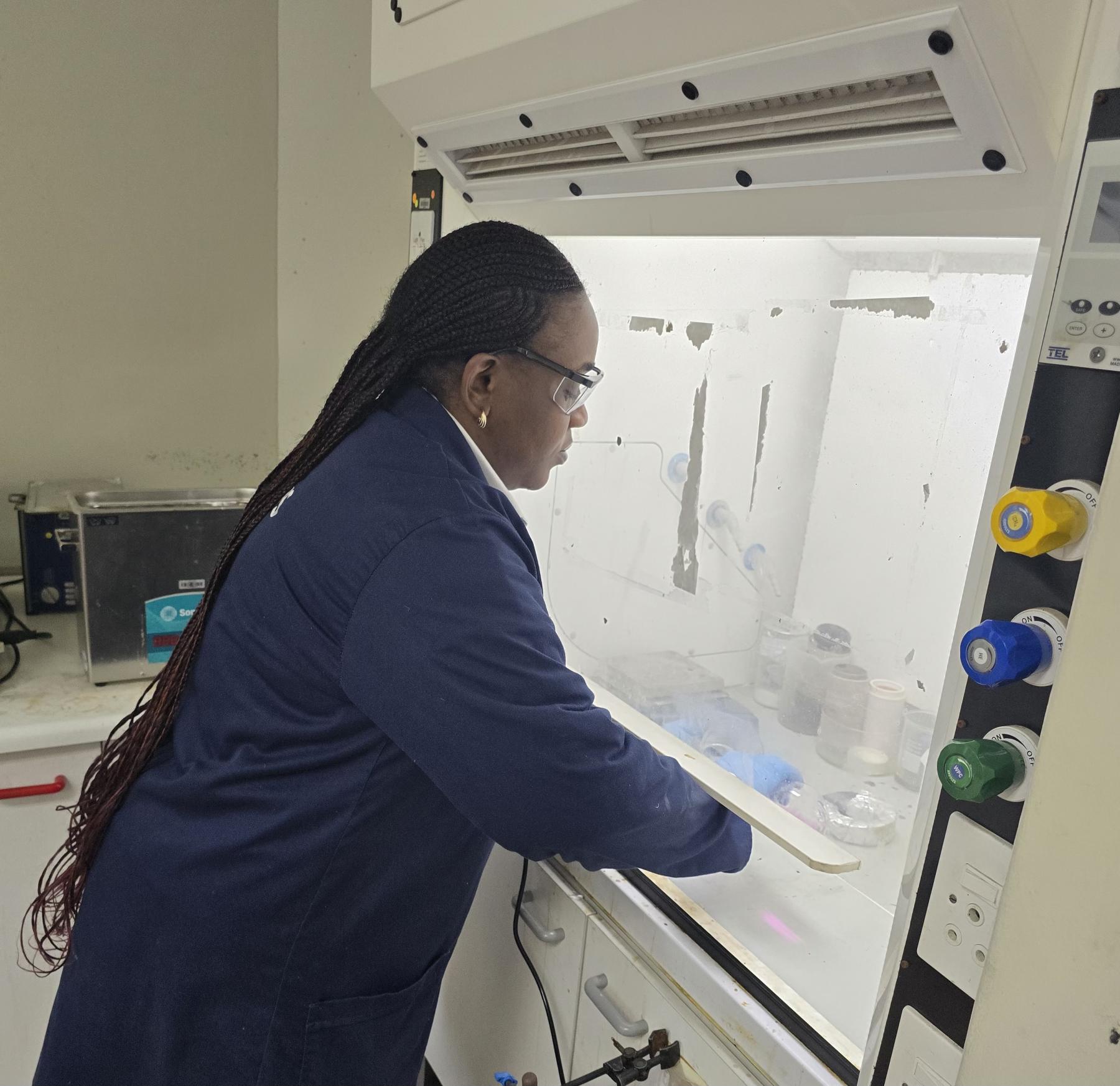
“One of the students wrote ‘I would like to nominate Muthumuni. I trust she will do the job well. Her willingness to listen to others and make time to help in the lab on top of having her own busy schedule makes me trust her for this job.’”
And three years later, Dr. Muthumuni Managa is still a “role model for young women in science” in South Africa, as Nyokong stated.
“You lose nothing by trying”
Beyond her work in the Association of South African Women in Science and Engineering executive committee, her participation in various community engagement projects and the mentoring of young women, Managa is also a supervisor for many Master and PhD students.
“She constantly encouraged me to step outside my comfort zone and pursue opportunities I might have otherwise doubted myself in,” Meladi Lerato Motloutsi, a PhD Candidate in Chemistry at the University of South Africa, under the Institute for Nanotechnology and Water Sustainability, specializing in membrane science and technology for water research, told Agripreneurs d’Afrique.
“She would always say, ‘You lose nothing by trying’. Those words stayed with me. Because of her encouragement, I applied for opportunities I once thought were beyond my reach, and today, I have received several awards as a result.”
According to Motloutsi, her supervisor sees “great talent” in students and “pushes them to achieve more”. “A blessing” the young scientist has experienced since they worked together on several research projects on developing sustainable water solutions for rural communities.
“What attracted me even more was her passion and excellence in research,” the PhD candidate said. “She is deeply committed to her work, especially in developing meaningful solutions, and that inspired me tremendously.”
Thanks to that proximity that has shaped her own academic journey, Meladi Lerato Motloutsi is committed to make a “real impact” in her work today.
“Don’t wait for anyone”
To young women like Motloutsi, Dr. Muthumuni Managa always puts her motivational voice on display : “you can be anything you want in life. And never allow anyone or anything to make you feel or believe that you’re not capable of reaching the goals, anything, that you set for yourself.”
An advice Managa has learned from various obstacles she has faced and keeps facing in her professional career: “you work in a room where they’re just looking at you like you’re young, you’re a female, you’re black… you don’t have a status.”
Sometimes, people underestimate her. During her trips overseas, “especially in European countries”, she meets those who believe that Africa is “also behind” in terms of research.
“They’re surprised when you tell them that we have all the things that they have,” she sighs, still frustrated.
So part of her job is to change that perception and empower more young women in science. She encourages them to “work hard”, be determined and “don’t wait for anyone”.
Passion for baking
“What continues to inspire my love for research and supervision is witnessing my students succeed and grow beyond simply obtaining a degree,” she says. “I believe in making a meaningful and holistic impact on my students’ journeys, both academically and personally.”
Besides her supervision, the mother to a 6-year-old daughter has obtained grants, fellowships and awards from many universities and organizations around the world. She also worked with various international collaborators.
For water purification for example, she has teamed up with Dr. Ojodomo Achadu from Teesside University and Professor Christian Nkanga from the University of Kinshasa in DRC.
They received funding ( £300,000) from the Royal Society’s International Science Partnerships Fund (ISPF) - International Collaboration Award. Their goal is to use tiny particles, known as nanomaterials and nanotechnology processes, coupled with solar energy to purify water.
When she is not teaching, supervising or doing research, Managa enjoys spending “quality time” with her “beautiful” daughter and investing energy on her passion for baking. “One day, I hope to attend culinary school to further develop and perfect this passion.”
Josiane Kouagheu